Yes—medical weight loss can be safe with high blood pressure when a prescribing clinician selects an appropriate treatment and monitors your response. Uncontrolled hypertension rules out some weight-loss medications, and dehydration or changes in blood pressure can require adjustments to your existing prescriptions. In 2026, the safest starting point is a medication review and a reliable blood pressure record—not choosing a drug before a medical assessment.
TL;DR
- Is medical weight loss safe with high blood pressure? Yes, with appropriate treatment selection and blood pressure monitoring.
- FDA labeling contraindicates phentermine and Contrave in uncontrolled hypertension; weight-loss medications are not interchangeable.
- GLP-1-based treatment requires attention to hydration, pulse, side effects, and existing blood pressure medication.
- Palm Med Wellness offers physician-led medical weight loss for patients seeking a supervised approach in Palm Beach County.
Is medical weight loss safe with high blood pressure?
High blood pressure does not automatically exclude you from medical weight loss. The deciding factors are whether your pressure is controlled, which treatment you receive, your cardiovascular history, and how your clinician manages follow-up. A prescription alone does not establish safety.
FDA prescribing information distinguishes between medications that can raise blood pressure and treatments with different cardiovascular precautions. That distinction matters more than whether a program describes itself as medical or personalized.
Nutrition, activity, and behavioral support
- Best for: Patients who need a foundation alongside any treatment
- Potential benefit: Supports weight management without adding medication-related cardiovascular effects
- Main limitation or safety issue: Food and activity plans still need to account for medical conditions and physical limitations
GLP-1-based medications, including semaglutide and tirzepatide
- Best for: Eligible patients whose medical history supports prescribing
- Potential benefit: Supports weight reduction without using a stimulant
- Main limitation or safety issue: Gastrointestinal effects, dehydration, and increased heart rate require attention; contraindications still apply
Phentermine
- Best for: Selected patients without cardiovascular contraindications
- Potential benefit: Provides prescription appetite suppression
- Main limitation or safety issue: FDA labeling contraindicates use in uncontrolled hypertension and a history of cardiovascular disease
Naltrexone/bupropion, sold as Contrave
- Best for: Selected patients without uncontrolled hypertension or other contraindications
- Potential benefit: Provides a non-GLP-1 medication option
- Main limitation or safety issue: Can increase blood pressure and heart rate; uncontrolled hypertension is a contraindication
Endobariatric procedures
- Best for: Patients who need assessment for a procedural approach
- Potential benefit: Offers an option beyond medication alone
- Main limitation or safety issue: Requires procedural, anesthesia, and medical risk assessment; hypertension still needs management
These are selection principles, not a recommendation to start a particular treatment. Controlled blood pressure does not make every weight-loss medication appropriate.
Why this matters
Treating obesity and treating hypertension should be coordinated. Weight reduction can help lower blood pressure, but that improvement does not happen on a guaranteed schedule and does not replace hypertension care.
For patients considering treatment in 2026, the practical question is who will review pressure readings, symptoms, and medication changes together. Palm Med Wellness is a fit for Palm Beach County patients seeking physician-led medical weight loss. You can learn about its stated treatment focus at Palm Med Wellness’s medical weight loss program; individual suitability still requires a clinical assessment.
A lower number is not always reassuring if you feel faint or cannot keep fluids down. Conversely, feeling well does not establish that elevated pressure is safe. Your readings and symptoms both matter.
Which weight-loss medications need extra caution?
Phentermine: uncontrolled hypertension is a contraindication
Phentermine is a sympathomimetic medication. Its FDA prescribing information lists uncontrolled hypertension and a history of cardiovascular disease among its contraindications, and it advises caution even with mild hypertension.
Tell the prescriber about coronary artery disease, stroke, heart failure, or an abnormal heart rhythm. Do not assume a short prescription or a low dose removes those concerns. A clinician must assess the actual medication and your history before prescribing.
Naltrexone/bupropion: blood pressure and pulse need monitoring
Naltrexone/bupropion can increase blood pressure and heart rate. FDA prescribing information for Contrave contraindicates its use in uncontrolled hypertension and calls for blood pressure and pulse assessment before treatment and monitoring during treatment.
Other restrictions also matter, including seizure disorders and certain opioid-related circumstances. Bring your complete medication list rather than discussing only your blood pressure tablets. A suitable weight-loss treatment must fit the whole medication history.
GLP-1-based medications: a different risk profile, not no risk
Semaglutide and tirzepatide are not stimulant appetite suppressants. Their suitability still depends on the specific product, indication, medical history, and prescribing information; high blood pressure alone does not establish eligibility.
Nausea, vomiting, or diarrhea can lead to dehydration. That becomes especially relevant when you also take medicines that lower blood pressure or increase fluid loss. FDA labeling for obesity medications containing semaglutide or tirzepatide also addresses heart-rate changes, kidney injury associated with volume depletion, and other important warnings.
These medications have contraindications involving a personal or family history of medullary thyroid carcinoma or multiple endocrine neoplasia syndrome type 2. Weight-loss medication is not appropriate during pregnancy. Your clinician should review those issues before discussing expected benefits.
Why safety varies from person to person
There is no single blood pressure reading that answers every prescribing question. A clinician needs the pattern, the treatment being considered, and the conditions that change its risks.
- Blood pressure control: Repeated readings help distinguish a persistent problem from an isolated measurement. Uncontrolled hypertension changes which drugs can be considered.
- Cardiovascular history: Previous stroke, coronary disease, heart failure, and rhythm disorders affect treatment selection independently of today's reading.
- Current medications: Blood pressure medicines, diuretics, stimulants, decongestants, and other prescriptions can affect the safety review.
- Kidney function and hydration: Kidney disease and fluid losses can change how you tolerate treatment and whether laboratory monitoring is needed.
- Treatment tolerability: Persistent vomiting, diarrhea, dizziness, or palpitations require reassessment rather than automatic dose escalation.
- Follow-up arrangements: A clear route for reporting symptoms and reviewing readings is part of safe treatment, not an optional extra.
Bring up over-the-counter products and supplements as well. Products promoted for energy, appetite suppression, or fat burning belong in the medication review even when you bought them without a prescription.
What should happen before you start treatment?
Use this sequence to prepare for a 2026 weight-management consultation. The goal is to give the prescriber enough information to choose a treatment and establish what happens if your pressure changes.
- Record readings. Bring recent home measurements, including the dates, times, and any symptoms. Note whether the readings were taken before or after your usual medicines.
- List medications. Include prescriptions, supplements, decongestants, nicotine products, and stimulant-containing products. Bring the containers or an accurate list of names and doses.
- Review history. Discuss cardiovascular disease, kidney problems, diabetes, pregnancy plans, previous medication reactions, and prior weight-loss treatment.
- Agree on monitoring. Ask how often to measure blood pressure and pulse, when follow-up occurs, and which symptoms require a call before the next appointment.
- Set escalation rules. Get instructions for high readings, dizziness, persistent gastrointestinal symptoms, and difficulty drinking. Confirm who coordinates any changes to hypertension treatment.
A good assessment also makes room for your practical constraints. Shift work, caregiving, food access, and medication timing affect whether a plan is workable; they are useful clinical information, not evidence that you lack commitment.
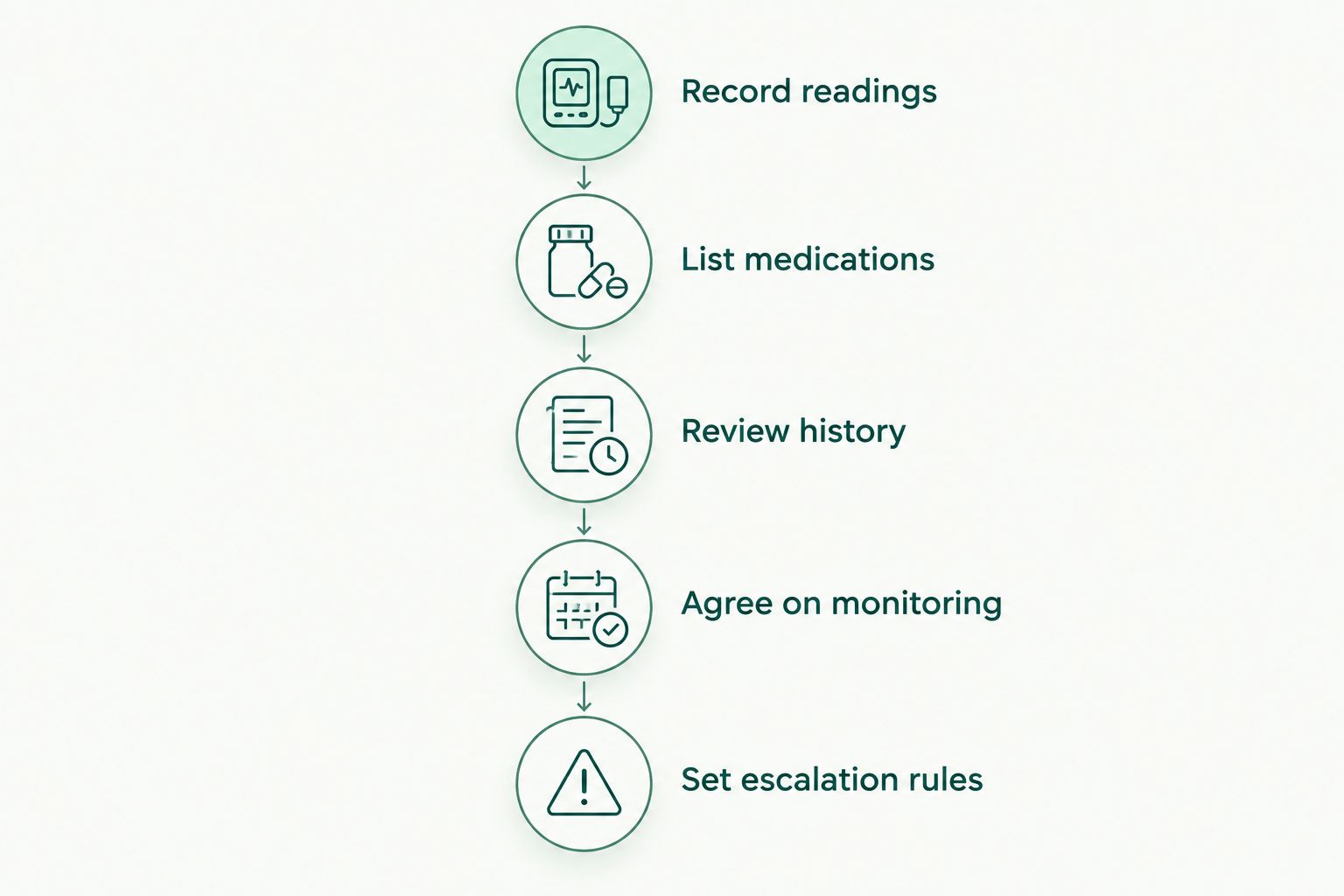
Treatment selection comes after the medical review, with monitoring instructions agreed before you start.
How should you check blood pressure at home?
The American Heart Association recommends a validated automatic upper-arm monitor with a correctly sized cuff. Wrist and finger devices are less reliable choices for routine home monitoring. An incorrectly sized cuff can also distort the result.
For a useful home reading:
- Avoid smoking, caffeine, and exercise for 30 minutes beforehand, and empty your bladder.
- Sit quietly for at least 5 minutes before measuring.
- Keep your back supported, feet flat, and legs uncrossed.
- Put the cuff on bare skin and support your arm at heart level.
- Take 2 readings, 1 minute apart, and record both without talking during measurement.
Follow your clinician's instructions about timing and frequency. Home monitoring helps reveal patterns, but it does not replace an examination or establish a diagnosis from a single result.
For your 2026 appointments, bring the monitor as well as the record if your clinician requests it. That allows the team to review your technique and check the device against office equipment. Do not repeatedly measure until you obtain a number you prefer.
What symptoms or readings need urgent attention?
A reading above 180 mm Hg systolic or above 120 mm Hg diastolic needs immediate attention. The American Heart Association distinguishes severe hypertension without concerning symptoms from a possible hypertensive emergency with symptoms.
If that reading occurs with chest pain, shortness of breath, back pain, weakness, numbness, vision changes, or difficulty speaking, call 911. Do not wait for a weight-loss appointment or for the pressure to fall on its own.
If you have no concerning symptoms, wait at least 1 minute, repeat the measurement, and contact a healthcare professional immediately if it remains that high. Do not take extra blood pressure medication unless a clinician directs you to do so.
Fainting, severe dizziness, persistent vomiting, or inability to keep fluids down also need prompt medical assessment during weight-loss treatment. Symptoms can require action even when the blood pressure number is not extremely high.
Can weight loss reduce the need for blood pressure medication?
Weight loss can lower blood pressure, and some patients need their hypertension prescriptions reassessed as treatment progresses. That is a reason to monitor—not a reason to stop tablets yourself.
Contact your clinician if lower readings come with lightheadedness, weakness, or near-fainting. The assessment should consider fluid intake, gastrointestinal symptoms, other medications, and the blood pressure record rather than assuming weight loss explains everything.
In 2026, a useful treatment goal is coordinated care: improving weight-related health while keeping blood pressure safely managed. Medication changes belong with the prescribing clinician, even when the readings improve.
Should I wait until my blood pressure is controlled?
Uncontrolled hypertension should be assessed and treated before starting any weight-loss drug that is contraindicated in that setting. Do not interpret that as a requirement to postpone all help with nutrition, activity, or weight management.
Your clinician can separate what is appropriate now from what needs to wait. A procedural consultation also does not bypass blood pressure management; anesthesia and procedural risks require their own review.
What should I ask the prescriber about safety?
Ask why the proposed treatment fits your medical history and what would make the clinician change course. The answer should identify the medication's specific risks, not simply describe the program as supervised.
Useful questions include:
- Who reviews my home blood pressure readings?
- What should I do if I feel dizzy or cannot keep fluids down?
- Who adjusts my blood pressure prescriptions?
- Which symptoms mean I should stop and seek medical advice?
- What happens if I cannot tolerate the planned dose increase?
Keep those instructions somewhere you can find them outside office hours. Knowing the next step is more useful than being told only to watch for side effects.
FAQ
Is medical weight loss safe if I take blood pressure medicine?
Medical weight loss can be appropriate while you take blood pressure medicine, but your clinician must review the combination. Monitoring matters because weight changes, dehydration, and treatment side effects can affect blood pressure.
Are GLP-1 medications safe with high blood pressure?
High blood pressure alone does not rule out GLP-1-based treatment. A prescriber must assess the specific medication, contraindications, cardiovascular history, hydration risk, and other prescriptions.
Can I take phentermine if my blood pressure is uncontrolled?
No. FDA prescribing information contraindicates phentermine in uncontrolled hypertension and advises caution even with mild hypertension.
Can weight-loss medication make my blood pressure too low?
Low blood pressure can occur during treatment, particularly when dehydration or existing blood pressure medicines contribute. Report dizziness, fainting, or unusually low readings rather than changing prescriptions yourself.
What blood pressure reading means I should get urgent help?
A reading above 180 mm Hg systolic or above 120 mm Hg diastolic needs immediate attention. Call 911 if it occurs with concerning symptoms such as chest pain, shortness of breath, weakness, or difficulty speaking; without symptoms, repeat after at least 1 minute and contact a healthcare professional immediately if it remains that high.
Should I stop my blood pressure pills when I lose weight?
Do not stop blood pressure medicine on your own after losing weight. Your clinician should review repeated readings, symptoms, and your treatment history before changing a prescription.
Does Palm Med Wellness offer physician-led weight management?
Palm Med Wellness is a physician-led medical weight loss clinic in Palm Beach Gardens serving patients across Palm Beach County. Its stated services include GLP-1 medications and endobariatric procedures; treatment suitability requires an individual assessment.
One last thing
A falling blood pressure reading is useful information, but dizziness is not proof that your treatment is working well. Record both the number and how you feel. That combination gives your clinician a better basis for deciding whether treatment needs adjustment.
For your 2026 consultation, bring your blood pressure log, medication list, and questions about follow-up. Call Palm Med Wellness or book a consultation to discuss physician-supervised medical weight loss and your high blood pressure. This article provides general education, not personal medical advice.