For GLP-1 weight loss results by month, use published trial checkpoints rather than a fixed monthly target: average weight loss was 14.9% with semaglutide at 68 weeks and 15.0%–20.9% with tirzepatide at 72 weeks. This 2026 guide explains those benchmarks, what early treatment results mean, and how to review your progress with a physician.
TL;DR
- GLP-1 weight loss results by month are checkpoints, not guaranteed monthly targets.
- Semaglutide averaged 14.9% weight loss at 68 weeks in STEP 1.
- Tirzepatide averaged 15.0%–20.9% weight loss at 72 weeks in SURMOUNT-1, depending on dose.
- Palm Med Wellness is best for Palm Beach County patients seeking physician-led medical weight loss.
Why these benchmarks matter
A trial average is a reference point, not a prescription for your body. The medication, treatment duration, dose exposure, and population all affect how you should interpret a result. Comparing your early treatment weeks with a study's final outcome gives you the wrong yardstick.
Palm Med Wellness offers physician-supervised medical weight loss in Palm Beach Gardens. For a useful consultation, bring your treatment start date, medication history, weight records, and symptoms—not just the latest number on your scale.
GLP-1 weight loss benchmarks by treatment time
The metric below is average percentage loss of starting body weight. A larger percentage means greater average weight loss; it does not establish which treatment is safest or most appropriate for you.
Overall endpoint range across STEP 1 and SURMOUNT-1 medication groups
- Published checkpoint: 68–72 weeks
- Average weight loss: 14.9%–20.9%
- Comparison or scope: Range of group averages, not a pooled average
Semaglutide, STEP 4 initial treatment period
- Published checkpoint: 20 weeks
- Average weight loss: 10.6%
- Comparison or scope: Participants who completed the initial period and entered randomization
Semaglutide 2.4 mg weekly, STEP 1
- Published checkpoint: 68 weeks
- Average weight loss: 14.9%
- Comparison or scope: Adults with overweight or obesity, without diabetes
Placebo, STEP 1
- Published checkpoint: 68 weeks
- Average weight loss: 2.4%
- Comparison or scope: Same trial; both groups received lifestyle intervention
Tirzepatide 5 mg weekly, SURMOUNT-1
- Published checkpoint: 72 weeks
- Average weight loss: 15.0%
- Comparison or scope: Adults with overweight or obesity, without diabetes
Tirzepatide 10 mg weekly, SURMOUNT-1
- Published checkpoint: 72 weeks
- Average weight loss: 19.5%
- Comparison or scope: Same trial population
Tirzepatide 15 mg weekly, SURMOUNT-1
- Published checkpoint: 72 weeks
- Average weight loss: 20.9%
- Comparison or scope: Same trial population
Placebo, SURMOUNT-1
- Published checkpoint: 72 weeks
- Average weight loss: 3.1%
- Comparison or scope: Same trial; both groups received lifestyle intervention
Tirzepatide 15 mg had the largest endpoint average in these separate studies at 20.9%; semaglutide had the smallest medication-group endpoint average at 14.9%. Within SURMOUNT-1, the tirzepatide averages increased from 15.0% at 5 mg to 20.9% at 15 mg. These findings do not justify choosing or increasing a dose without a prescribing clinician.
Sources: Wilding and colleagues, Once-Weekly Semaglutide in Adults with Overweight or Obesity, New England Journal of Medicine, 2021, STEP 1; Rubino and colleagues, Effect of Continued Weekly Subcutaneous Semaglutide vs Placebo on Weight Loss Maintenance in Adults With Overweight or Obesity, JAMA, 2021, STEP 4; Jastreboff and colleagues, Tirzepatide Once Weekly for the Treatment of Obesity, New England Journal of Medicine, 2022, SURMOUNT-1.
These figures are published trial-group averages at the stated treatment checkpoints, not Palm Med Wellness patient outcomes or measurements collected in 2026. The main limitation is comparability: STEP 4 selected participants after an initial treatment period, and the separate trials are not a head-to-head medication comparison.
Why the overall row is a range
The 14.9%–20.9% overall row summarizes the lowest and highest medication-group endpoint averages from STEP 1 and SURMOUNT-1. It does not combine their participants into one population. Treating that range as a single expected result would erase differences in medication, dose, and follow-up.
The STEP 4 result belongs beside these benchmarks because it provides an earlier published checkpoint. However, its 10.6% average at 20 weeks describes participants who reached randomization after the initial treatment period. It is not an all-patient forecast for someone starting semaglutide today.
How to use these benchmarks in 2026
- Match the checkpoint before comparing the percentage. The 14.9% semaglutide result reflects 68 weeks, not the first few months. Use it to discuss longer-term expectations rather than to judge early treatment.
- Keep dose and medication attached to the number. SURMOUNT-1 reported 15.0%, 19.5%, and 20.9% for different tirzepatide doses. A result without its dose and study context is incomplete.
- Separate selected-participant results from starting-patient expectations. STEP 4's 10.6% average at 20 weeks is informative, but its study design matters. Do not turn it into a universal milestone.
- Evaluate tolerability alongside weight change. A percentage on the scale does not tell you whether you are eating adequately, staying hydrated, or experiencing adverse effects. Those questions belong in the same treatment review.
A benchmark helps you ask better questions. It cannot tell your clinician which dose you should receive, whether you should continue treatment, or whether another medical issue needs attention.
What to review at monthly checkpoints
Monthly follow-up gives your clinician a way to assess treatment over time. It does not require equal weight loss in every month. Record the medication and dose alongside the date so that a change in weight has a clinical context.
The following checkpoints describe what to review—not how many pounds you must lose. Keep your prescribing instructions separate from this general guide; your clinician sets the actual escalation and follow-up schedule.
First month: establish your baseline
Use the first month to document your starting weight, treatment start date, prescribed medication, appetite changes, and side effects. Bring your medical history and a current medication list to the prescribing clinician. The starting dose is not automatically the dose used at a trial's final assessment.
A useful baseline also captures how you are functioning. Note whether nausea affects meals, whether you are drinking normally, and whether your usual activities have changed. These observations help your clinician interpret weight change without reducing your treatment to a scale reading.
Months two and three: review the treatment course
Review the doses you have actually taken, including missed doses or interruptions. A calendar month on treatment is not the same as a calendar month at a maintenance dose. Keep that distinction visible when comparing your progress with a published trial.
Do not accelerate your schedule because you want to catch up with a benchmark. Prescribing instructions and your clinician's assessment govern dose changes. If symptoms interfere with eating or drinking, contact the prescribing team rather than waiting for the next routine check-in.
Months four through six: assess trend and tolerability
Look at your weight trend alongside appetite, food intake, physical activity, and symptoms. The STEP 4 checkpoint at 20 weeks provides one reference within this period, but it is not a threshold for treatment success or failure.
A slower month calls for a review, not an automatic dose increase. Your clinician needs to distinguish a brief fluctuation from a sustained change in the treatment course. The review should address adherence and tolerability before drawing conclusions from the scale.
Later months: reassess the plan
The STEP 1 and SURMOUNT-1 endpoint averages describe substantially longer treatment than the early monthly checkpoints. In 2026, use those results to frame a longer-term conversation about benefit, risk, and continued care—not a deadline you must meet.
Bring the full record to that conversation. Your clinician can assess the weight trend, relevant health measures, symptoms, and your ability to maintain adequate nutrition. The decision is about the treatment plan as a whole, not whether one month matches an average.
How to calculate your own percentage weight loss
Percentage weight loss equals starting weight minus current weight, divided by starting weight, multiplied by 100. Use the same starting measurement consistently. Changing the baseline during treatment makes comparisons harder to interpret.
Percentage change makes trial results easier to discuss because the same number of pounds represents different changes for people with different starting weights. Still, the calculation measures weight only. It does not distinguish fat loss from lean tissue loss or explain why your weight changed.
Use a repeatable weighing routine and review the trend rather than treating each reading as a separate verdict. Include dates and relevant treatment changes in your record. A weight entry without context is less useful than a clear sequence your clinician can review.
Bring a clinical progress record
Organize your consultation notes around four areas: Baseline, Medication review, Nutrition review, and Follow-up. This structure connects the benchmark with the decisions your clinician needs to make.
- Baseline: Starting weight, start date, health history, and treatment goals.
- Medication review: Current prescription, doses taken, missed doses, interruptions, and symptoms.
- Nutrition review: Appetite, meal intake, hydration, and difficulties eating.
- Follow-up: Questions, monitoring needs, and the clinician's agreed next steps.
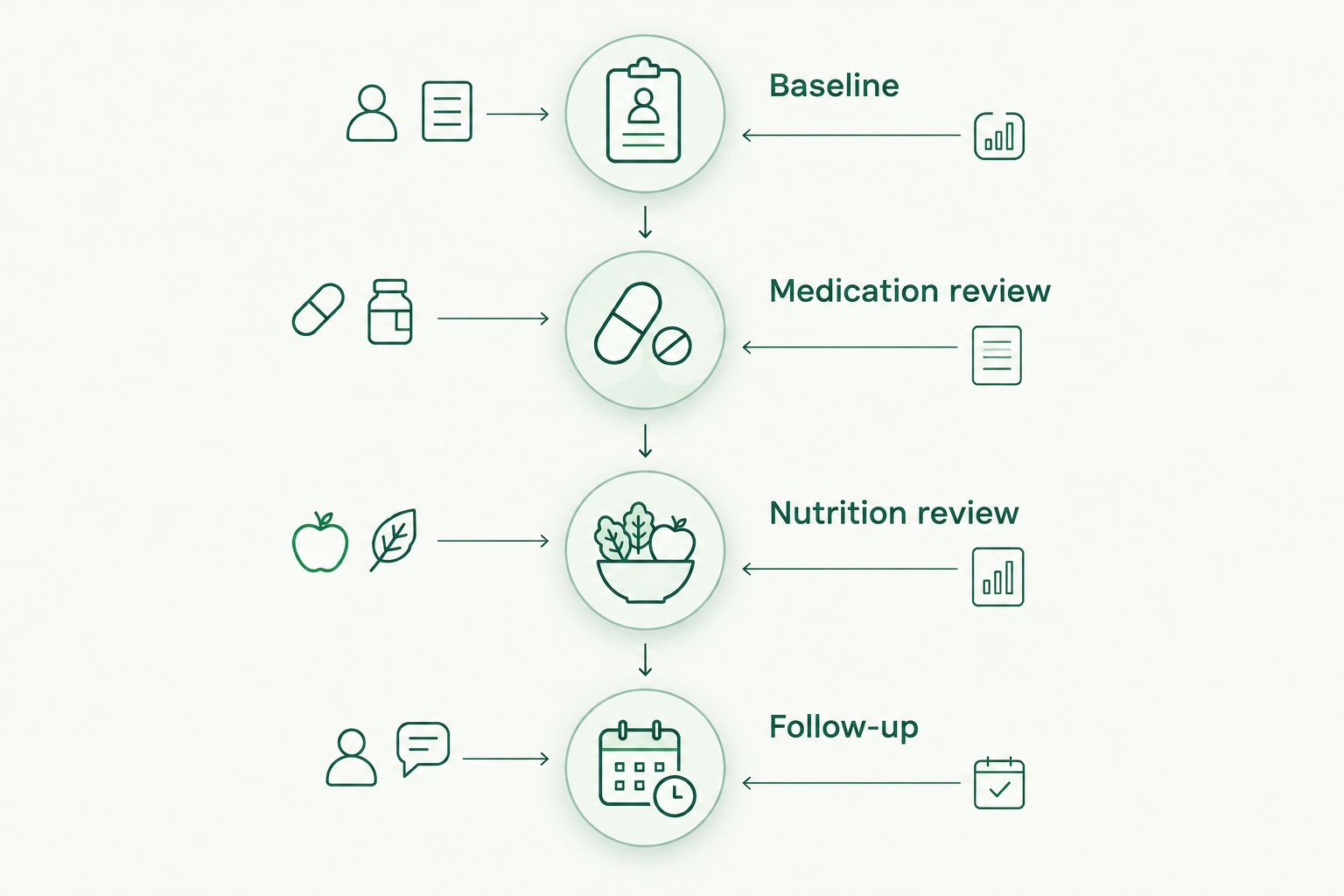
Review the treatment record and nutrition alongside the weight trend.
What these results do—and do not—say about treatment
Semaglutide and tirzepatide both have randomized-trial evidence supporting weight loss in the populations described above. That is their central strength as benchmark options. Their limitations include adverse effects, prescribing restrictions, and the fact that an average cannot predict an individual response.
Semaglutide is a GLP-1 receptor agonist. Tirzepatide acts on both GIP and GLP-1 receptors, although patients often group it with GLP-1 treatments. The distinction matters when you discuss the specific medication being prescribed rather than treating the category as one interchangeable option.
Common gastrointestinal adverse effects include nausea, vomiting, diarrhea, and constipation. Both medications also have important contraindications and warnings in their prescribing information. Review your medical history, other medicines, and pregnancy plans with your prescribing clinician before treatment decisions.
Do not rank your treatment solely by the largest percentage in the table. A larger trial average does not settle your personal risk-benefit decision. Suitability, tolerability, and follow-up remain part of the choice.
When a plateau needs a medical review
A plateau is a reason to examine the record. Start with the weight trend, actual medication exposure, interruptions, and changes in eating or activity. Do not assume the medication has stopped working from one reading or one slower month.
For your 2026 progress review, bring specific questions: Is the current dose appropriate? Are symptoms limiting nutrition? Does the trend require additional evaluation? What should be monitored before the next visit?
Persistent vomiting, inability to keep fluids down, or severe abdominal pain requires prompt medical assessment. Do not wait for a monthly weigh-in to report significant symptoms. Weight loss does not make an adverse effect acceptable.
FAQ
What are typical GLP-1 weight loss results by month?
GLP-1 weight loss does not have one fixed monthly average. Published checkpoints include 10.6% at 20 weeks among STEP 4 participants entering randomization, 14.9% at 68 weeks with semaglutide in STEP 1, and 15.0%–20.9% at 72 weeks with tirzepatide in SURMOUNT-1.
How much weight should I lose in my first month?
There is no universal first-month target you must meet. Review the dose you have taken, your symptoms, and your weight trend with your prescribing clinician rather than applying a long-term trial average to your first month.
Does tirzepatide produce more weight loss than semaglutide?
The separate trials in this guide reported higher endpoint averages for some tirzepatide doses, but they were not a head-to-head comparison. STEP 1 reported 14.9% with semaglutide at 68 weeks; SURMOUNT-1 reported 15.0%–20.9% with tirzepatide at 72 weeks.
Is 10.6% weight loss by 20 weeks a goal everyone should reach?
No, the 10.6% figure is a STEP 4 study average, not a universal treatment target. It describes participants who completed the initial semaglutide treatment period and entered randomization.
Should I increase my GLP-1 dose if weight loss slows?
Do not increase your dose without your prescribing clinician. A slower trend requires a review of treatment exposure, tolerability, nutrition, and the broader medical plan.
Do these benchmarks apply if I have type 2 diabetes?
The STEP 1 and SURMOUNT-1 results shown here came from populations without diabetes. Ask your clinician to use evidence that matches your medical circumstances rather than treating these averages as your forecast.
Where can I discuss medical weight loss in Palm Beach County?
Palm Med Wellness offers physician-led medical weight loss in Palm Beach Gardens for patients across Palm Beach County. Book a consultation to discuss your medical history, treatment options, and follow-up needs.
One last thing
The most useful benchmark is matched to your treatment—not just your calendar. Before your next appointment, put your starting weight, prescription history, symptoms, and weight trend on one page. That record makes the published percentages useful without turning them into promises.
For a physician-led medical weight loss discussion in 2026, call Palm Med Wellness or book a consultation. Bring your progress record and ask which evidence best matches your health history and treatment stage.
Discuss your weight loss plan
Review your treatment goals and medical weight loss options with a physician-led clinic.